

"Where we love is home — home that our feet may leave, but not our hearts." — Oliver Wendell Holmes
There is a specific quality to the air in my hometown. It is heavier, laden with salt and humidity, carrying the metallic tang of the ocean. The moment I step off the train and that air hits my lungs, my shoulders drop two inches. My breathing slows. The frenetic metronome of my city life is forcibly reset to the slow, rhythmic rolling of the tides.
I spent my twenties running away from this place. I wanted to escape the smallness, the gossip, the slow pace where nothing ever seemed to change. I wanted the world. I wanted altitude. I wanted to be a "self-made" individual, untethered and aerodynamic. I saw my roots as anchors, weighing me down.
I was wrong. Roots do not exist to tie you to the ground; they exist to feed you. They exist to give you the leverage you need to reach upward without toppling over in the first strong wind.
Returning now, in my thirties, is a different experience. I look at my parents and I don't see the authoritarian figures of my childhood. I see people. I see the grey in their hair. I see the way my father's hands, once steady and terrifyingly strong, now tremble slightly when he holds a teacup. I see the lines around my mother's eyes, maps of a lifetime of worry—mostly about me.

In this house, love is not a spoken language. We don't say "I love you." That would be too awkward, too theatrical. Here, love is a verb. It is an act of service.
Love is a bowl of soup, placed silently on the table. It is my mother waking up at 5 AM to go to the market to buy the freshest fish because she knows it's my favorite, even though I haven't mentioned it in years. It is my father fixing a squeaky hinge on my old bedroom door, a task he probably saved for my visit just to show he is still useful.
It is hidden in the rustic devotion of daily rituals. The cutting of fruit after dinner. The boiling of water. The folding of laundry. These trivialities are the bricks that built the foundation of my life. I used to dismiss them as mundane. Now I see them as sacred.
And then there is the food. My mother speaks in flavors. A heavily salted braised pork means she is worried about my weight—she wants me to eat more rice. A sour soup means it is hot outside and she wants to cool me down. During this visit, I watched her pick the bones out of a fish with the precision of a surgeon, placing the best white meat into my bowl. It is a silent transfer of energy, of life force. To reject it is to reject her love. So I eat, even when I am full. I eat the history, the geography, and the affection that is cooked into every grain of rice.

I look at the wooden table where we eat. It’s scratched and worn. There is a deep gouge near the center—I remember making that with a toy car when I was five, a moment of bratty destruction that my father never sanded out. That scar is part of us now. I remember doing my homework there. I remember sulking there. I remember laughing there. That table has absorbed the emotional history of a family. It is a witness.
But there is a shadow to this light: the guilt of the one who left. Every time I return, I see what I have missed. The slow decline of the house, the new aches in my parents' joints. I chose my own life, my own ambition, over the duty of presence. It is the immigrant's burden, even within one's own country. You gain the world, but you lose the daily continuity of home. You become a cameo in the movie of your family's life, appearing only for special episodes.
My father’s hands are calloused. He worked with them all his life, shaping wood, fixing engines, building things so that I could work with my mind. I type on a keyboard. My hands are soft. I exist in the abstract. He exists in the concrete. There is a guilt there, a gap between the physical labor he endured and the digital ease I enjoy. But when he looks at me, I don't see resentment. I see pride. I am his project. I am the result of those calloused hands.

The gravity of roots is undeniable. No matter how far I travel, no matter how many sophisticated cities I live in, this saltwater breeze is the baseline frequency of my soul. When I am lost, when the world feels too loud and too fake, I find myself pulling on that invisible tether, drawing myself back to the source.
I realize now that independence is an illusion. We are all dependent. We are the sum of the sacrifices made for us. I am not self-made; I am family-made. I am village-made.

Sitting on the porch, watching the sun dip into the ocean, I feel a profound sense of continuity. I am part of a lineage. My story is just a chapter in a much longer book. This realization is not a burden; it is a relief. It means I don't have to carry the weight of the universe alone. I have back-up. I have a harbor.
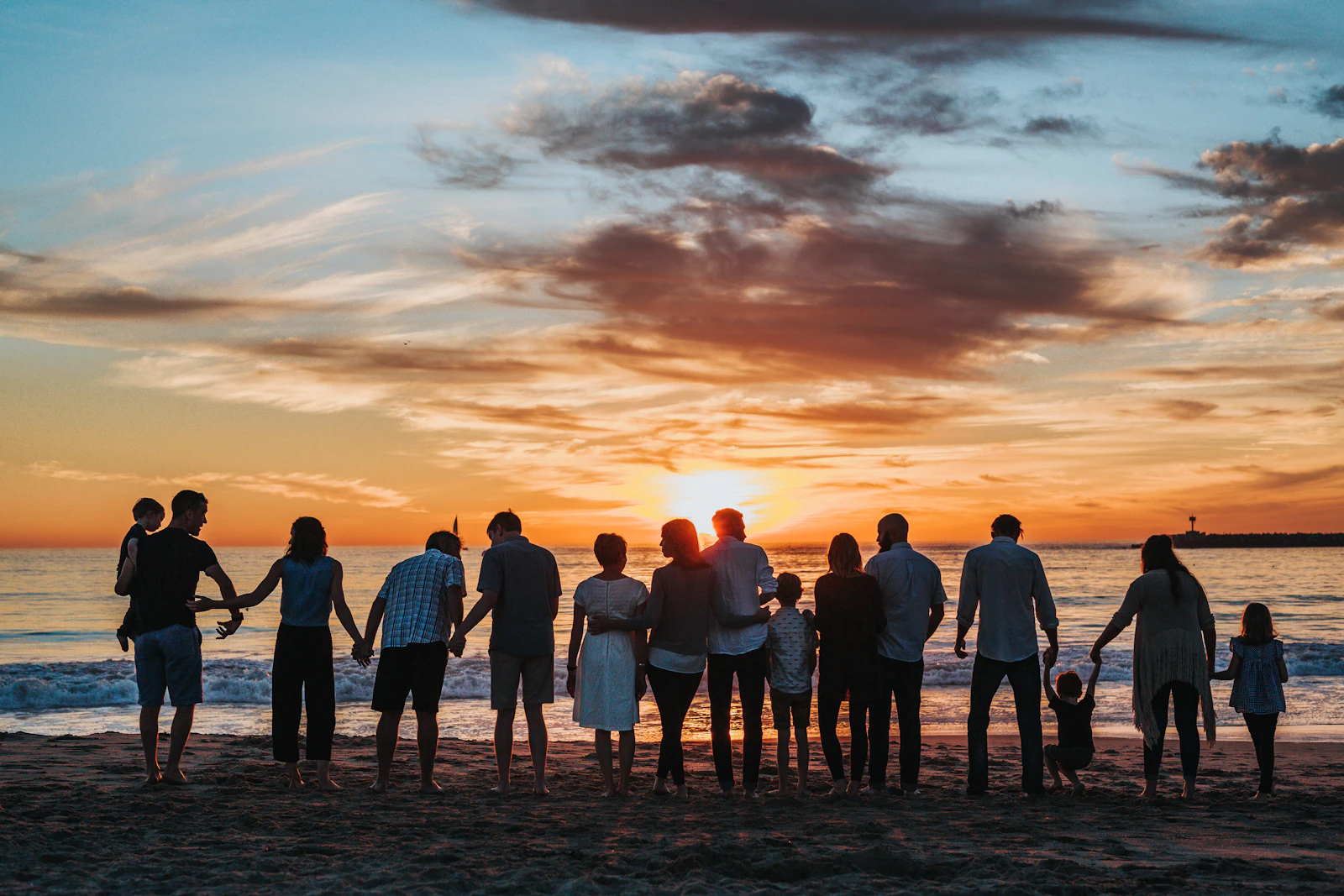
The sea breeze whispers the unspoken language of family. It says: "You can go. You can fly. You can change. But you can always come back. The door is unlocked. The soup is hot. We are here."
And that singular fact is the source of all my courage.

Roots don't hold you back. They hold you up.